
Crawl space moisture and what it does to your foundation
By Timothy Moose, Managing Editor · Updated 2026-10-30

Most people only think about the crawl space when something goes wrong. Moisture is the usual culprit. Water from poor drainage, a leaking pipe or humid air condenses under the house, and the wood above pays the price. If you are dealing with this, the crawl space and structural repair category lists local companies. This is general information, not health or engineering advice.
Signs of trouble
- Musty smell in the house
- Floors that feel soft, bouncy or cupped
- Visible mold or white fuzz on wood
- Standing water or damp soil
- Insulation sagging or falling
- Pests in the crawl space
What moisture does
Wet wood loses strength and can rot. Joists and beams may sag. Soil under piers can soften, letting a pier settle. That ties moisture directly to structural repair. Reviewers who mention drainage and water problems often describe crack repair and waterproofing being handled together.
Common fixes
| Fix | What it does | Typical need |
|---|---|---|
| Regrading and gutters | Moves surface water away | Water pooling near the house |
| French drain | Collects and redirects groundwater | Persistent wet soil |
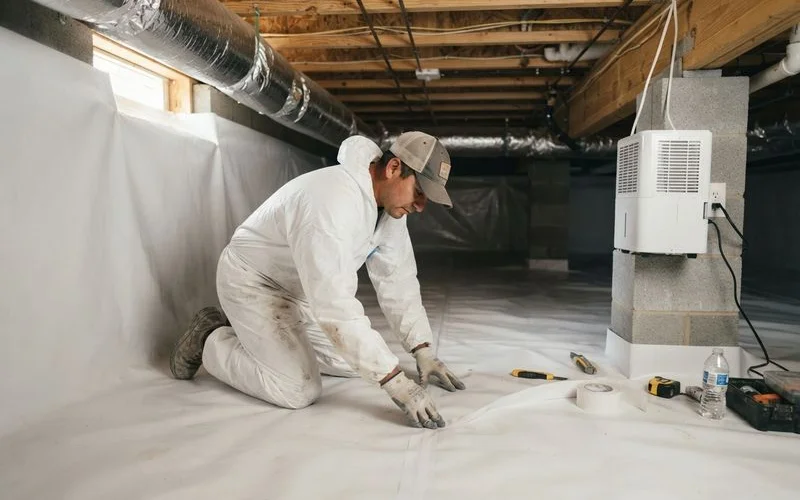
| Vapor barrier | Slows ground moisture rising | Bare soil floor |
| Encapsulation | Seals the whole space | Chronic humidity |
| Sump pump | Removes collected water | Recurring standing water |
| Sistering or replacing joists | Restores damaged framing | Rot or sag |
The glossary has short definitions for French drain, vapor barrier and sump pump.
Order of operations
- Find the water source.
- Fix drainage and leaks first.
- Repair damaged wood and piers.
- Add moisture control.
Skipping step 2 means the problem returns. If you smell mold or see heavy growth, bring in a qualified person before disturbing it.
Health and air quality
Air from a crawl space can rise into the house, carrying humidity, musty odors and sometimes mold spores. If anyone in the household has asthma or allergies, damp crawl spaces are worth fixing for that reason alone. This is general information, not medical advice, and a doctor can address health concerns.
Pests and insulation
Moisture draws pests and ruins fiberglass insulation. Wet insulation stops insulating and holds water against the floor above. Replacing it without fixing the moisture source just repeats the problem.
What a good inspection includes
A thorough crawl space inspection should include photos of piers, beams and joists, moisture readings, a note on ventilation and a description of where water enters. The report should say what needs structural repair and what needs moisture control. Companies that bundle both under one price should itemize them.
Upkeep once fixed
Check the space once or twice a year. Look for new stains, pooling after storms and loose liner edges. Keep gutters clear and the grade sloping away. If cracks or sticking doors show up as well, the foundation warning signs guide helps you judge what is normal. A small maintenance habit protects a significant investment.
Choosing help
Ask for photos of what the inspector found and a written scope that separates structural repair from moisture control. See how we score to understand our rankings and visit the home page to explore other categories.
Frequently asked questions
- Is a damp crawl space a foundation problem?
- It can become one. Moisture rots wood, weakens joists and can soften soil under piers.
- What is encapsulation?
- Sealing the crawl space with a liner on the floor and walls so ground moisture stays out. See the glossary for the full definition.
- Should I check the crawl space myself?
- Looking from the access door with a flashlight is fine. Do not enter if you see standing water, wiring hazards or mold.
- Can moisture cause musty smells indoors?
- Yes. Air from the crawl space moves upward into living areas.